- +91-9810368671
- info@tajmahaldaytripfromdelhi.com
- New Delhi, Delhi 110055

The Taj Mahal is not just a monument, it is an emotion carved in white marble. As one of the most photographed landmarks on Earth, this symbol of eternal love draws millions of travelers to Agra every year. People travel across continents with a single dream in mind, to stand before the Taj and witness its beauty with their own eyes. Yet, what truly makes the experience unforgettable is discovering how the Taj changes with light, time, and perspective.
When I visited Agra a few months ago, I thought I knew what to expect. I had seen countless photographs online, read stories, and watched travel films. Still, nothing prepared me for that quiet moment before sunrise, walking through the grand red sandstone gate, when the Taj Mahal slowly revealed itself through the morning haze. It felt unreal, almost dreamlike. What surprised me even more was learning that you do not always need to be inside the main complex to admire and photograph this wonder of the world.
Agra offers several incredible viewpoints that allow you to see the Taj Mahal from unique angles. Some are famous, others remain relatively hidden, but each offers a different mood and story. After spending several days exploring the city and scouting the best photo locations, this guide brings together the most rewarding spots for Taj Mahal photography, along with practical tips to help you plan your visit smoothly.
Timing plays a crucial role in experiencing and photographing the Taj Mahal. The months between October and December, along with late February and March, are considered ideal due to pleasant weather and clearer skies. Winter mornings can be cold but offer soft light and better air quality. However, this period also attracts large crowds, especially during December holidays, and hotel prices tend to rise quickly.
Spring months, particularly March, offer a beautiful balance. The weather is comfortable, crowds are slightly thinner, and early mornings often come with misty sunrises that give the Taj an almost surreal glow. Watching the monument emerge through fog as the sun rises is a moment that words can hardly capture, yet it stays etched in memory forever.
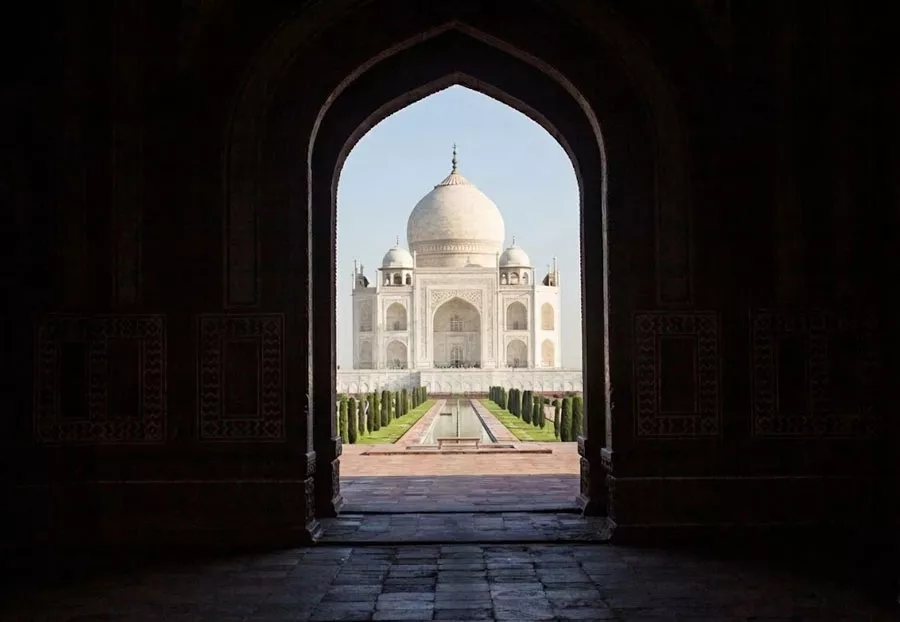
The Taj Mahal has three main gates known as the East Gate, West Gate, and South Gate. Tickets can be purchased at the East and West gates starting one hour before sunrise and until forty five minutes before sunset. The South Gate is currently used only as an exit.
The West Gate is mostly used by locals and Indian visitors and tends to be crowded. The East Gate is preferred by foreign travelers as it is closer to popular hotels and is usually less busy. Entry fees vary depending on nationality, with additional charges if you wish to enter the main mausoleum. Booking tickets online is highly recommended as it saves time and offers a small discount.
The Taj Mahal remains closed to tourists every Friday due to prayers at the mosque beside the mausoleum.
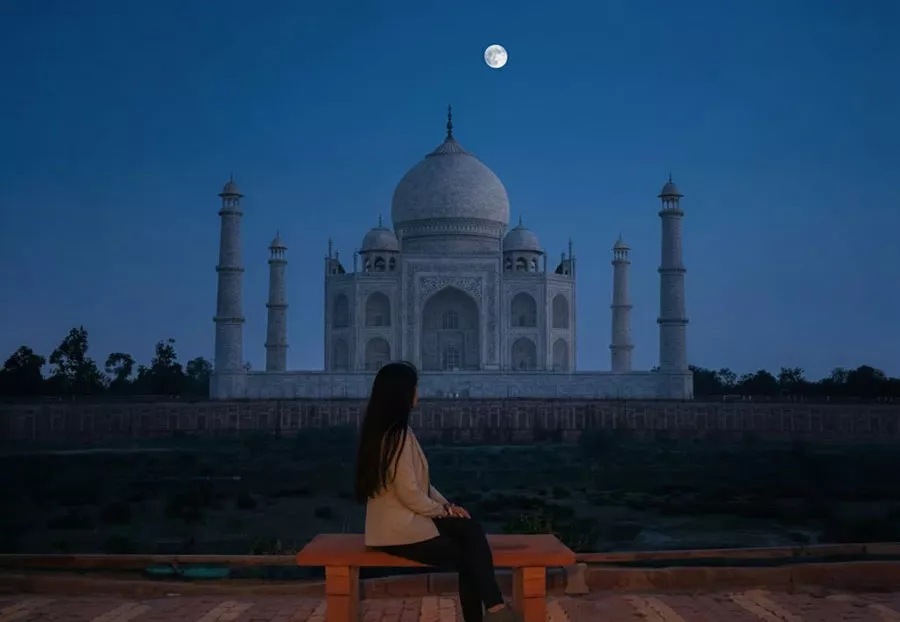
For those seeking romance and something truly extraordinary, a full moon night visit is magical. Night viewing is available only five nights each month, including the full moon night and two nights before and after. Entry is limited to a small number of visitors, and each session lasts only thirty minutes, making planning essential.
The marble reflects moonlight beautifully, creating a soft glow that feels almost otherworldly. If night photography fascinates you, this experience is worth planning your trip around.
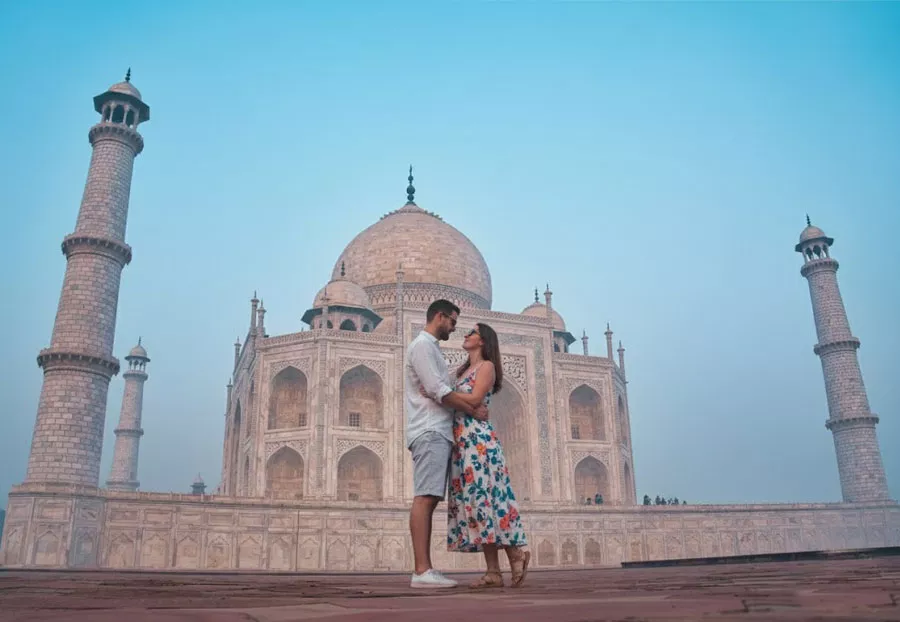
Most visitors arrive at the Taj Mahal with a mental checklist of iconic photographs they have already seen on postcards, travel blogs, and social media. While recreating these classic shots is satisfying, the real beauty of photographing the Taj lies in slowing down and experimenting. A slight change in angle, a different foreground, or waiting for the right light can completely transform your image. The Taj Mahal is remarkably photogenic from every direction, and even the smallest shift in position can reveal a fresh and unexpected perspective.
Since tripods are not allowed inside the complex, steady hands and patience become essential. Take a moment to observe how the light moves across the marble and how shadows change throughout the morning. Wearing bright or contrasting colors also helps create striking images, allowing the subject to stand out beautifully against the soft white tones of the monument.
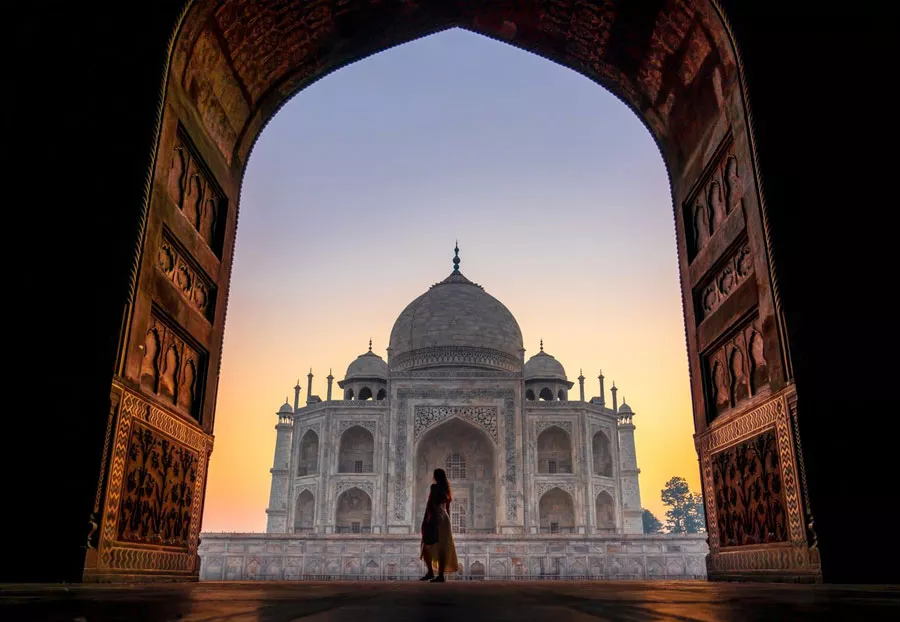
One of the most admired and visually powerful perspectives of the Taj Mahal comes from the mosque on the right side of the complex. Reaching this spot early at sunrise gives you the chance to frame the monument through red sandstone architecture while the first rays of sunlight glow behind the marble dome. The contrast between warm and cool tones creates a dramatic and timeless photograph.
A similar composition can be achieved from the guest house on the left side, but many photographers prefer the mosque viewpoint for sunrise as it offers richer light and stronger shadows. While photographing here, remember that this space is still used for prayer, especially on Fridays. Being respectful of the surroundings not only shows cultural sensitivity but also allows you to enjoy the experience more peacefully.
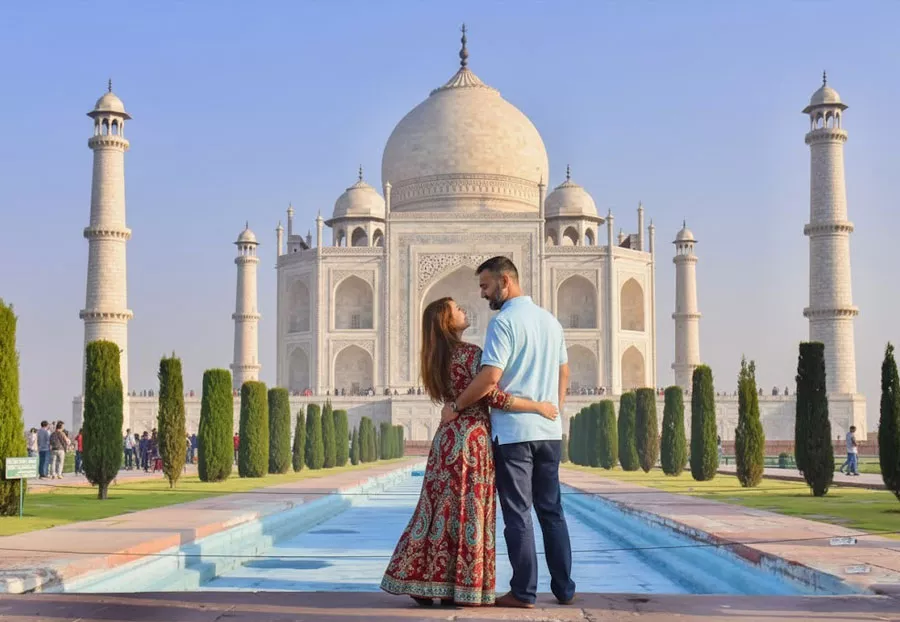
The long reflecting pool leading toward the Taj Mahal is one of the most recognizable and beloved views in the entire complex. Its perfect symmetry, combined with reflections shimmering in the water, creates a composition that feels almost unreal. This viewpoint appears in magazines, travel guides, and countless photographs across the world.
Although this area attracts many visitors, patience is key. Crowds often move quickly, and with a little waiting, you can capture a clean and balanced shot. The best light here is usually in the early morning when reflections are sharper and the atmosphere feels calm.
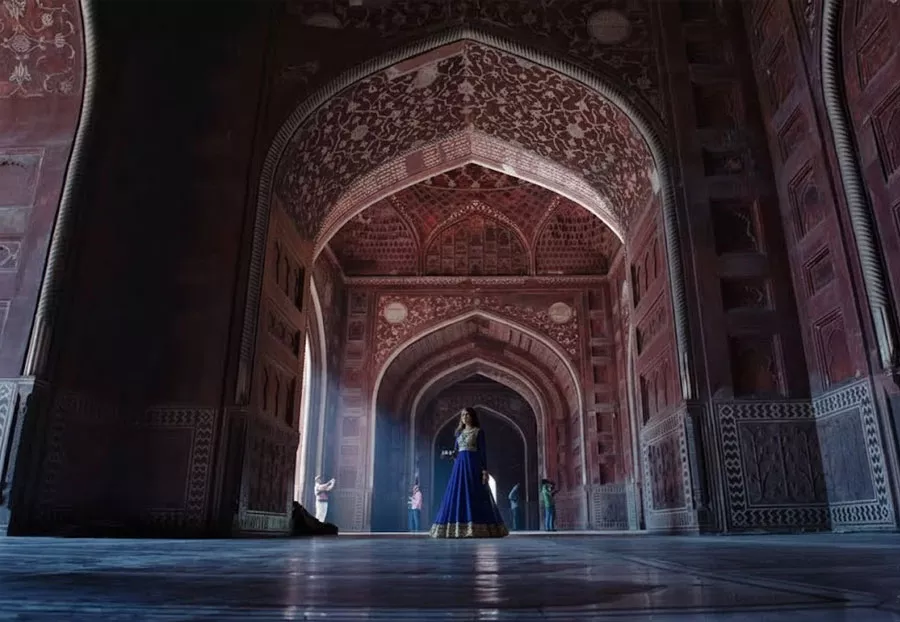
While the white marble mausoleum naturally draws most of the attention, the surrounding complex is filled with visual treasures that deserve just as much admiration. Delicately carved doorways, floral inlay patterns, graceful arches, and red sandstone structures offer endless creative possibilities.
By walking slowly through the gardens and corridors, you will begin to notice frames that many travelers overlook. These quieter corners allow you to tell a more intimate story of the Taj Mahal, focusing not just on its scale but also on its craftsmanship and fine details.
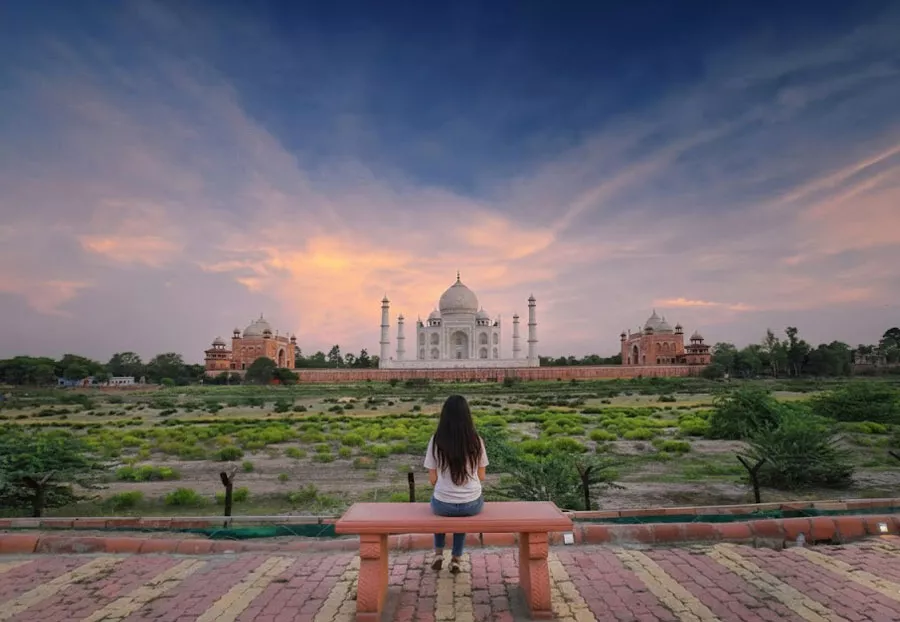
Mehtab Bagh, often called the Moonlight Garden, sits quietly across the Yamuna River and offers one of the most serene sunset views of the Taj Mahal. As the sun begins to set, the monument gradually changes color, reflecting soft hues of gold, pink, and orange. The calm river and open garden space create a peaceful atmosphere that feels far removed from the crowds inside the main complex.
One of the most magical moments here is watching birds return to their nests as daylight fades. Their silhouettes crossing the sky add movement and emotion to sunset photographs, making this location a favorite among photographers.
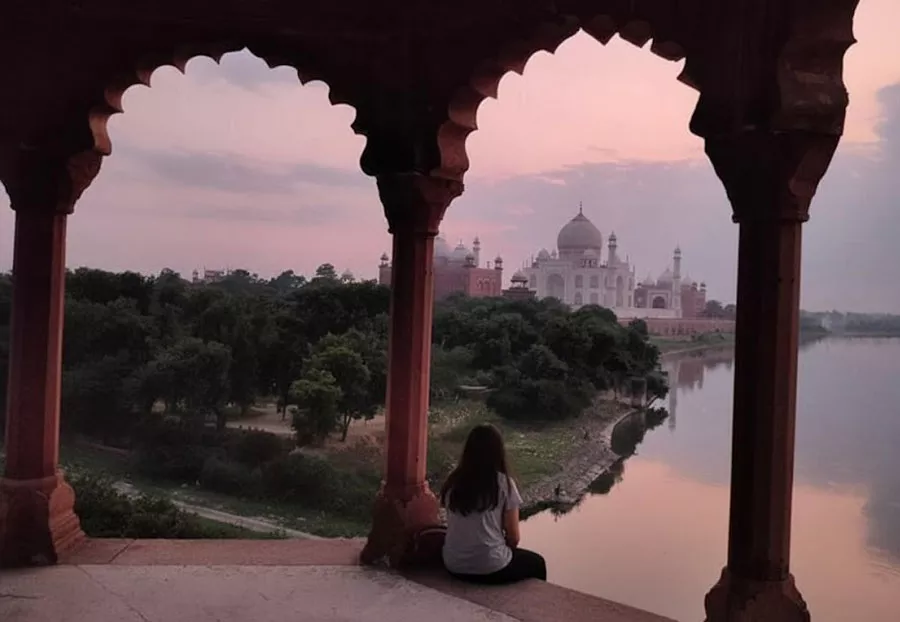
Near the riverbank, there is a lesser known gazebo that offers an elevated and unobstructed view of the Taj Mahal at sunset. Reaching this spot requires a short walk along uneven paths, and visitors are usually asked to pay a small local fee. Despite becoming more popular in recent years, the viewpoint still feels intimate and rewarding.
For photographers willing to explore beyond the usual paths, this location provides a rare sense of solitude and a unique angle that stands out from typical Taj Mahal images.
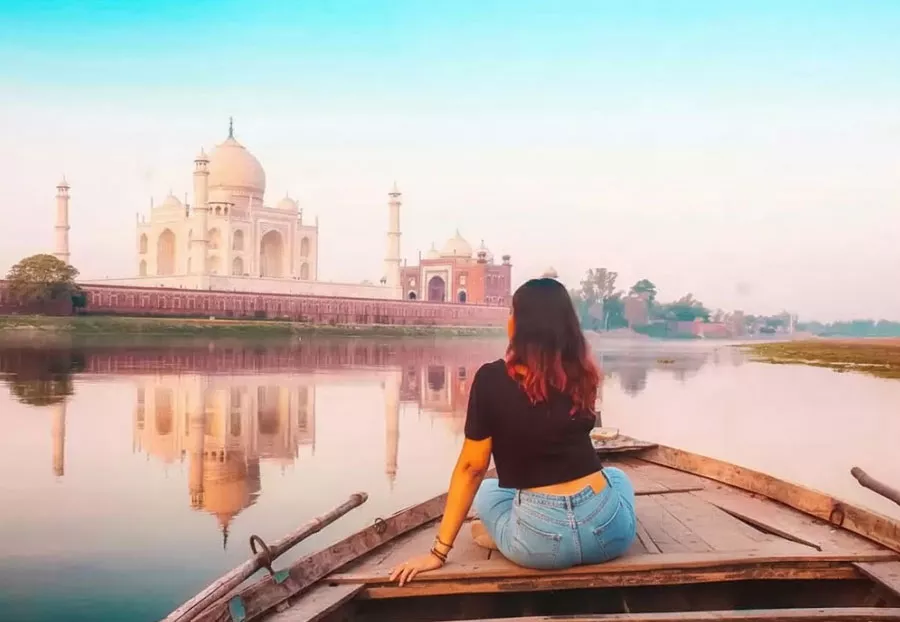
In the past, boat rides on the Yamuna River offered dreamy sunrise views of the Taj Mahal. However, these activities are now restricted. Rather than supporting unauthorized experiences, visiting the riverbanks early in the morning remains a responsible and equally beautiful alternative.
From the river’s edge, you can capture soft silhouettes of the Taj Mahal reflected in calm water, especially during misty mornings. These quiet moments often result in some of the most atmospheric photographs of the monument.
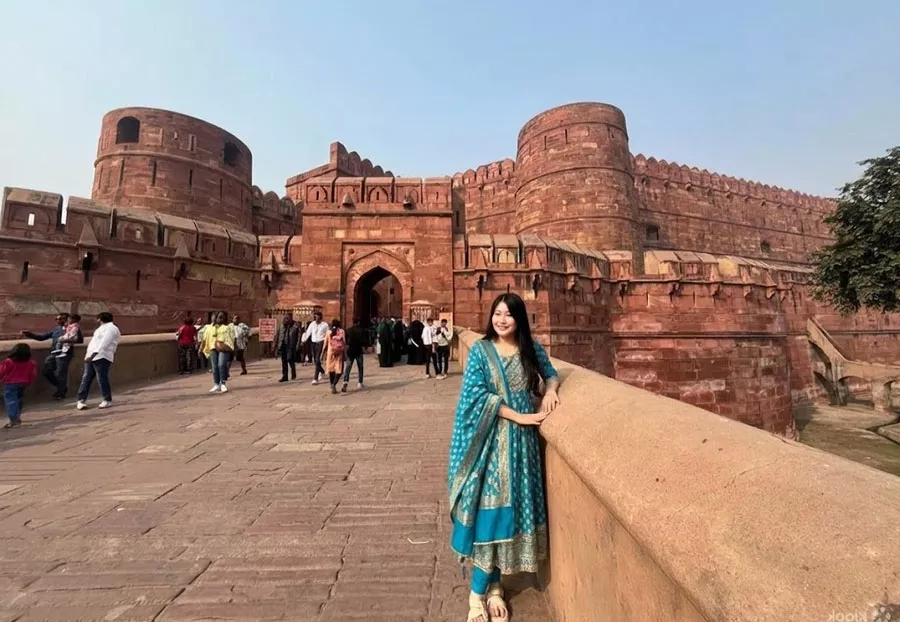
Behind Agra Fort, along the Yamuna River, lies one of the most dramatic and lesser visited sunrise viewpoints. Reaching this area takes effort and careful walking, but the reward is extraordinary. As the sun rises, the Taj Mahal appears as a glowing silhouette against golden skies, creating a powerful and emotional scene.
This location is best suited for travelers who are passionate about photography and willing to step off the usual tourist trail. The perspective is rare, the atmosphere is calm, and the experience feels deeply personal.
Once you arrive in Agra, the Taj Mahal is easily accessible by local transport such as taxis, auto rickshaws, and electric vehicles that operate near the monument zone.
Traveling from New Delhi to Agra is one of the most popular and hassle free routes. Trains offer the fastest and most comfortable option. Agra has multiple railway stations, with Agra Cantonment and Agra Fort being the most convenient for reaching the city center and the Taj Mahal.
The Gatimaan Express, departing from Hazrat Nizamuddin Railway Station in New Delhi, is the quickest train on this route and reaches Agra Cantonment in just about one hour and forty minutes. Several other express and superfast trains also run daily, making rail travel a reliable choice for both early morning and evening journeys.
Road travel from New Delhi is equally smooth and scenic. The Yamuna Expressway connects the two cities and allows for a comfortable drive of approximately four hours. The highway is well maintained and dotted with clean rest stops, cafes, and fuel stations along the way. Many travelers prefer booking a private taxi with a local driver, which offers flexibility and comfort, especially for families or couples. Leaving early in the morning helps avoid traffic and midday heat.
For those considering bus travel, both government and private buses operate frequently between New Delhi and Agra. Online platforms provide updated schedules and pricing, making it easy to plan in advance.
Jaipur is another common gateway to Agra, especially for travelers exploring Rajasthan along with the Golden Triangle. The journey from Jaipur to Agra can be completed comfortably by train, bus, or private transfer.
Several direct trains run daily between Jaipur and Agra Cantonment or Agra Fort, with an average travel time of around four hours. Some long distance trains passing through Jaipur reach Agra even faster, making rail travel a convenient and budget friendly option.
Driving from Jaipur to Agra takes approximately four to five hours, depending on traffic and route conditions. Many travelers enjoy this road journey as it allows for flexible stops and a relaxed pace. Private taxis are widely available and are often chosen by those who want a seamless travel experience.
Buses also connect Jaipur and Agra regularly, offering an economical option for solo travelers and backpackers. With multiple choices available, reaching the Taj Mahal from Jaipur is straightforward and well suited to different travel styles.
Let a professional travel specialist handle your transportation, sightseeing, and accommodation — so you can simply enjoy your journey.
 Call/WhatsApp: +91-9810368671
 Email: info@tajmahaldaytripfromdelhi.com
©2025. Taj Mahal Day Trip From Delhi. All Rights Reserved.